Charles Dickens is famous for his elegant prose. As well as creating some of the most memorable characters in English literature, his descriptions of Victorian London bring the past vividly to life.
In this exercise, we use a passage from the opening chapter of Bleak House to write our own description of a location shaped by distinctive weather.
Step One: Read the poem through
To begin this exercise, simply read Dickens’ description through at your own pace. Don’t think too hard about how it works – just pay attention to the images and feelings it evokes.
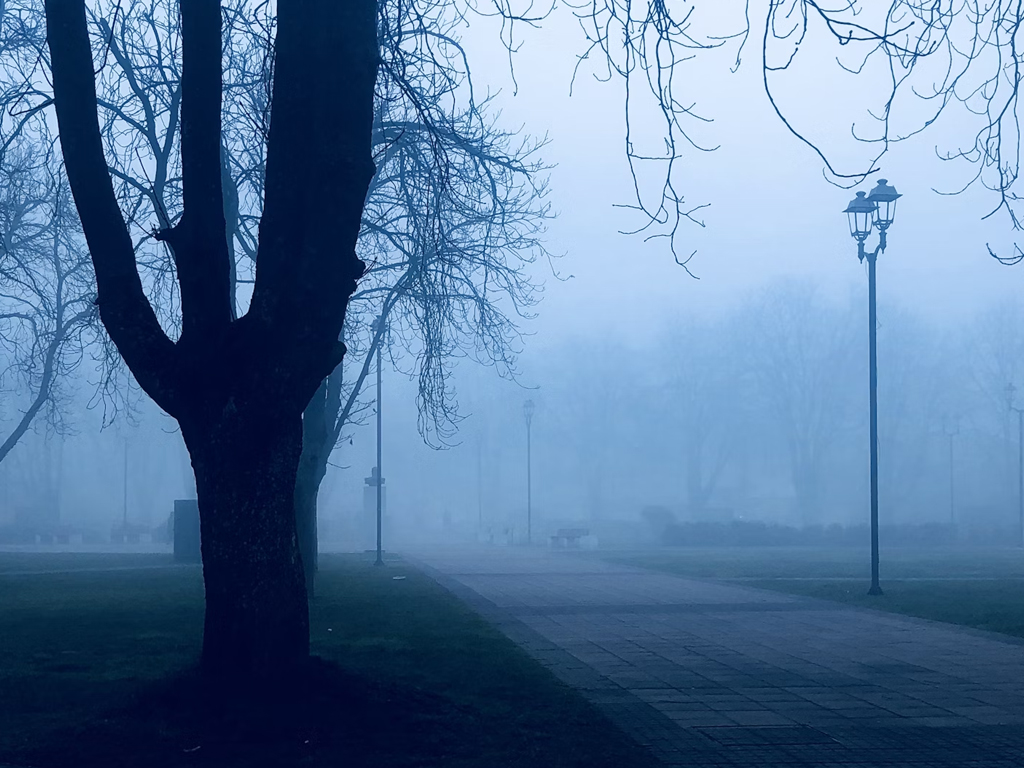
Fog everywhere. Fog up the river, where it flows among green aits and meadows; fog down the river, where it rolls defiled among the tiers of shipping and the waterside pollutions of a great (and dirty) city. Fog on the Essex marshes, fog on the Kentish heights. Fog creeping into the cabooses of collier-brigs; fog lying out on the yards and hovering in the rigging of great ships; fog drooping on the gunwales of barges and small boats. Fog in the eyes and throats of ancient Greenwich pensioners, wheezing by the firesides of their wards; fog in the stem and bowl of the afternoon pipe of the wrathful skipper, down in his close cabin; fog cruelly pinching the toes and fingers of his shivering little ’prentice boy on deck.
Charles Dickens, Bleak House
Step two – Notice Dickens’s technique
Now read the passage again, paying attention to the way that Dickens uses language to create particular effects.
One very obvious thing he does is start successive sentences with the word ‘fog’. It’s a very simple technique, but it creates a sense that the fog fills every corner of his world.
Another trick Dickens uses is to describe opposites – fog going both up and down the river.
What other clever uses of language can you spot?
Step three – Pick a scene to describe
Think of a place you remember well because of a particular kind of weather.
Some suggestions to start you off:
– A sunny day in your local park
– A rainy holiday destination
– A windy hillside where you once flew a kite
You can pick any location you like, as long as you remember the weather well.
Now think about the scene you have chosen. Is it uniform – like Dickens’ foggy landscape? Or do the weather conditions vary in different places. Might you have patches of sun and shade – or corners of shelter out of the wind.
Step Four – Start writing lines of descripton
Here you have you two choices:
- Either – you can start every line with the same word such as ‘sun’ or ‘sunny’
- Or – you can start successive lines with opposites such as ‘sun’ and ‘shade’
To begin with, just jot down different lines to describe different parts of the scene. How can much variety can you introduce within the constraints you’ve been given.
Step Five – Edit your description
How might you structure a longer piece of writing using your individual lines? Do they come to together to make a poem? Or perhaps they work better as the opening paragraph of a short story. If so, what happens next…?
 Write in the Head